

 Rotate phone to expand the chart below.

About Rett Syndrome
 Rett syndrome is a rare, progressive genetic neurodevelopmental disorder caused by variants in the MECP2 gene on the X chromosome. The variants lead to deficiency of the MeCP2 protein, which is responsible for normal function in the brain and other parts of the nervous system.
Children with Rett syndrome typically experience developmental delay at 6-18 months, then lose previously acquired skills—including speech, purposeful hand use and gross and fine motor abilities. Hallmark features include:
- Loss of expressive and receptive communication
- Loss of purposeful hand function and repetitive hand movements
- Gait abnormalities and mobility challenges
- Seizures, breathing irregularities and severe constipation
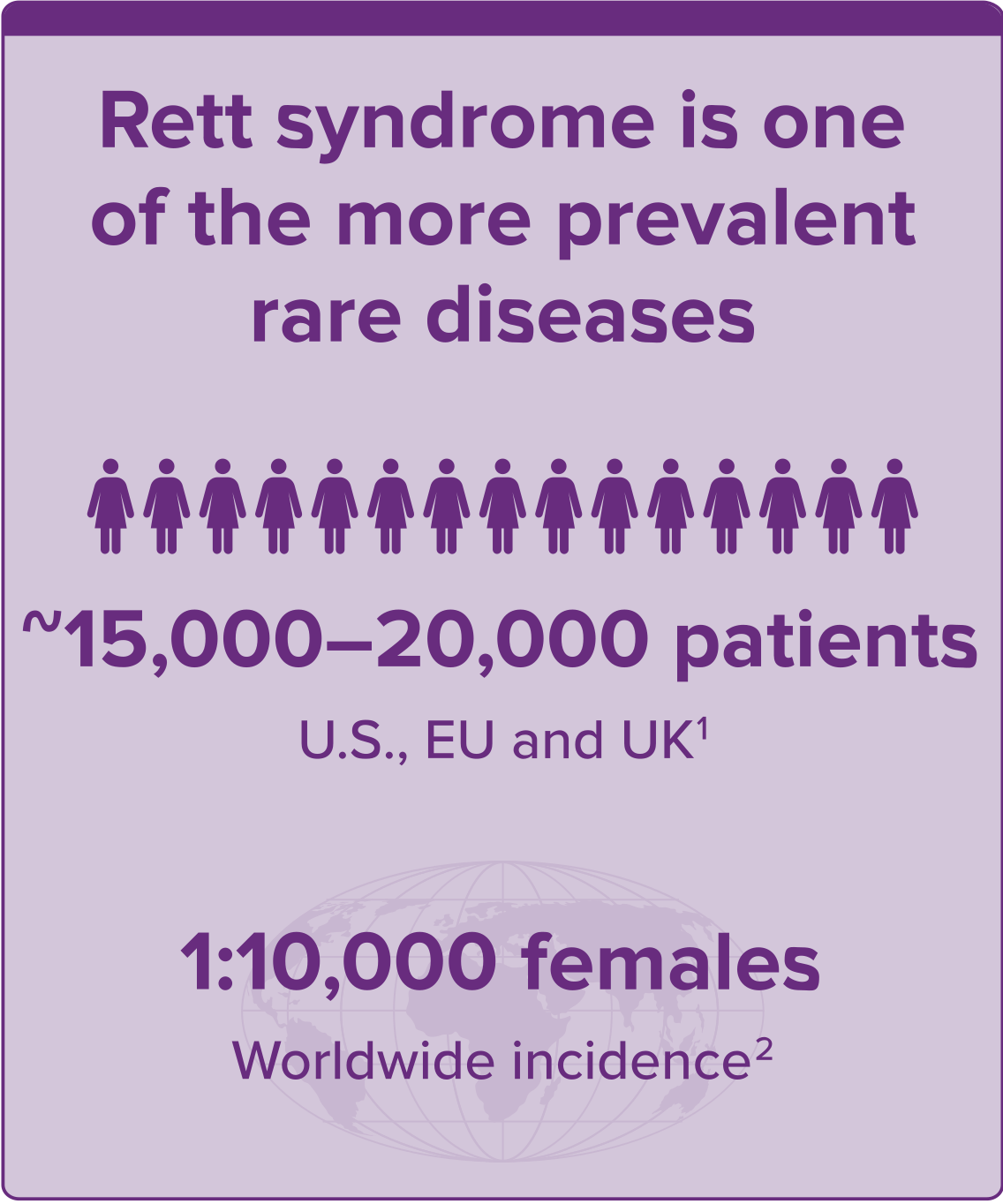
Rett syndrome has an estimated global incidence of 1 in 10,000 females1 and is estimated to affect approximately 15,000 females2 in the US, EU and UK.
1 Laurvick CL, de Klerk N, Bower C, Christodoulou J, Ravine D, Ellaway C, Williamson S, Leonard H. Rett syndrome in Australia: a review of the epidemiology. J Pediatr. 2006 Mar;148(3):34752. doi: 10.1016/j.jpeds.2005.10.037. PMID: 16615965
2 Based on incidence rates of 1:10,000 female births, Orphanet. (2021, January). Rett syndrome (ORPHA:778).

Rett Syndrome Clinical Program
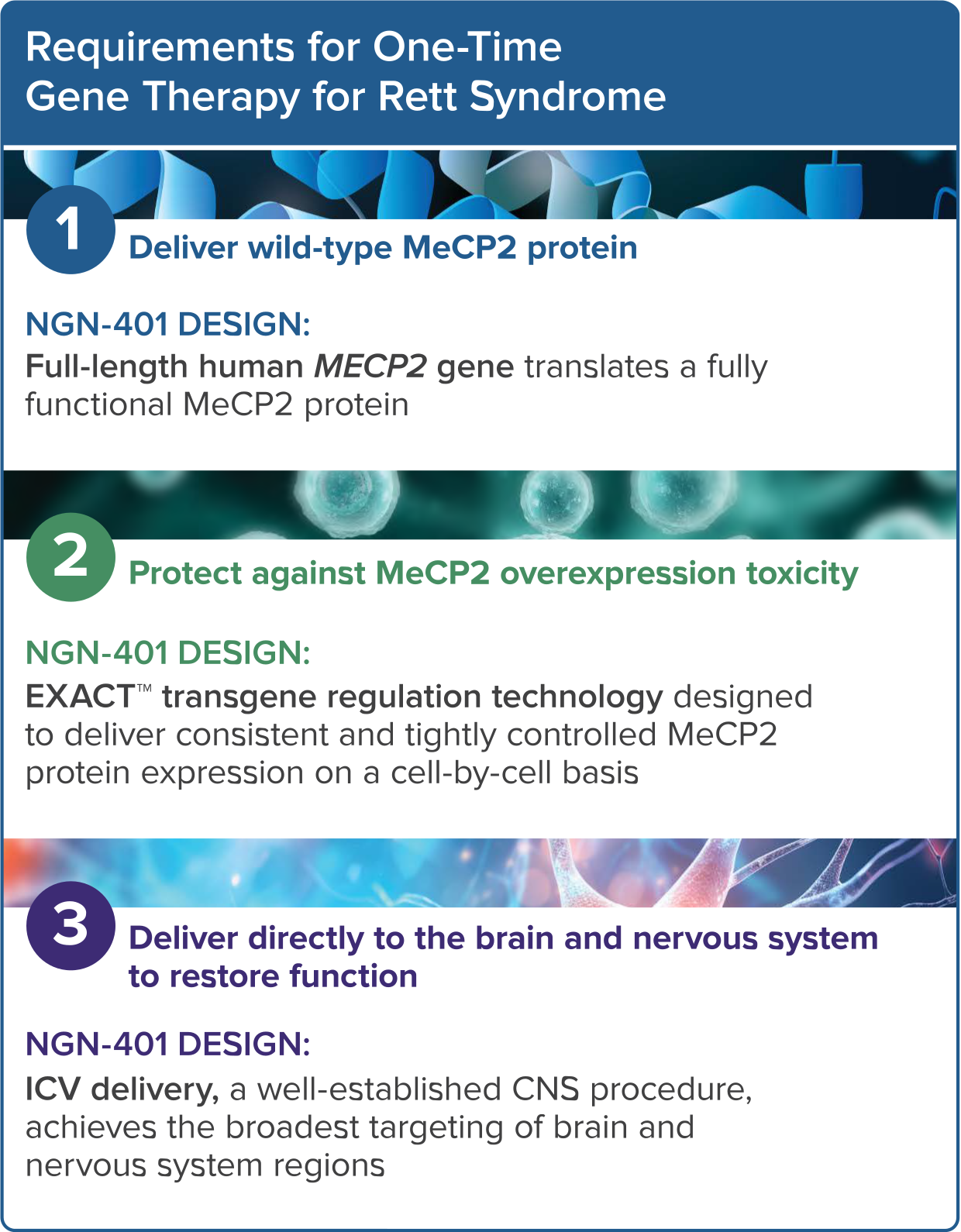
 We are evaluating NGN-401 in Embolden™, our open-label, baseline-controlled registrational clinical trial evaluating a single dose of NGN-401 (1E15 vg) in females with Rett syndrome ages three and older. The primary endpoint of Embolden is a Clinical Global Impression-Improvement (CGI-I) scale score of ≤3 and a new developmental milestone/skill documented on video and independently verified by blinded central raters.
Embolden was converted from our Phase 1/2 clinical trial evaluating NGN-401. Data from the Phase 1/2 trial have shown that participants who received NGN-401 experienced multidomain, durable gains with continued skill acquisition over time. In an interim update from the pediatric cohort (ages 4-10 cohort; n=10 for safety, n=8 for efficacy) of the trial with a data cutoff date of October 30, 2025:
- Participants showed functional improvements, including developmental milestones/skills gained across core clinical domains of Rett syndrome – hand function/fine motor, language/communication and ambulation/gross motor
- For participants who achieved improvements in the Clinical Global Impression-Improvement (CGI-I), those gains were durable as of the November 2024 interim data report
- NGN-401 at the 1E15 vg dose was generally well-tolerated in the pediatric cohort and the adolescent/adult cohort (ages ≥ 11 cohort)






 What is Rett Syndrome?
 Patient Advocacy and Engagement
 Communication Corner
 Rachel McMinn, Ph.D., is Chief Executive Officer of Neurogene and serves as Executive Chair of the company’s Board of Directors. She founded Neurogene in January 2018 with the mission of developing genetic medicines to improve the lives of neurologically-impaired people and their families. Prior to founding Neurogene, Dr. McMinn served as the Chief Business and Strategy Officer of Intercept Pharmaceuticals, a company dedicated to patients with serious liver disease. Prior to her industry experience, Dr. McMinn was an award-winning biotechnology analyst, with 13 years of experience at firms including Bank of America Merrill Lynch, Cowen, and Piper Jaffray. She graduated from Cornell University magna cum laude with a B.A. and earned her Ph.D. from The Scripps Research Institute and was awarded a Post-Doctoral Miller Fellowship at the University of California, Berkeley.
 Christine Mikail, J.D., is President and Chief Financial Officer of Neurogene. In her role, Ms. Mikail leads Corporate Strategy and Business Development, Portfolio Management, Operations, and Finance. Ms. Mikail, who joined Neurogene in 2019, brings over two decades of experience supporting biotechnology and pharmaceutical companies in corporate strategy and business development, operations, legal and finance capacities. Prior to Neurogene, Ms. Mikail was Chief Administrative Officer and Head of External Business Development/Alliance Management and General Counsel at Axovant Sciences, Inc., where she was an integral member of the team that raised $362 million in the company’s IPO. Prior to joining Axovant, she held a variety of senior executive positions at NPS Pharmaceuticals, Inc., Dendreon Corporation, Eli Lilly and Company, and ImClone Systems. Ms. Mikail developed her life sciences focus as a corporate and securities lawyer at Reed Smith and WilmerHale. Ms. Mikail graduated cum laude with a B.A. from Rutgers University and earned her J.D. from Fordham University School of Law in
  Andrew Mulberg, M.D., serves as Senior Vice President, Regulatory Affairs, Quality Assurance, and Quality Control at Neurogene. Dr. Mulberg is a pediatric gastroenterologist with nearly 30 years of experience and has a strong passion for helping bring important new medicines to market for patients with devastating rare diseases. In his role at Neurogene, he provides strategic leadership and direction for regulatory and quality activities. Prior to joining Neurogene, Dr. Mulberg led global regulatory affairs for Amicus Therapeutics and held various roles of increasing responsibility within global drug development and medical affairs at Johnson & Johnson. In addition to Dr. Mulberg’s biotechnology and pharmaceutical experience, he spent six years as the Division Deputy Director in the Division of Gastroenterology and Inborn Errors Products at the U.S. FDA. He received his B.A. from Columbia University and his M.D. from Mount Sinai School of Medicine. Dr. Mulberg also previously served as Attending Physician and Fellowship Director of Gastroenterology and Hepatology at Children’s Hospital of Philadelphia. He is currently an adjunct Professor of Pediatrics at the University of Maryland Medical Center, and Chairman of the Medical Advisory Board Go4 the Goal foundation, a pediatric cancer advocacy 501(c)(3) organization.
 Stuart Cobb, Ph.D., is Chief Scientific Officer at Neurogene. Dr. Cobb, who joined Neurogene in 2019, brings to the team more than 20 years of experience in translational neuroscience. He leads Neurogene’s scientific research, the development of scientific strategy to support the company’s existing and growing gene therapy portfolio, and efforts to identify novel technologies that complement Neurogene’s pipeline. In addition to his role at Neurogene, Dr. Cobb also leads a research team at the University of Edinburgh, where he is Professor of Translational Neuroscience at Simons Initiative in the Developing Brain and Centre for Discovery Brain Sciences. Prior to his work at Neurogene, Dr. Cobb was a Caledonian Research Fellow and led an academic research laboratory at the University of Glasgow. His research has focused on developing novel genetic treatments for brain disorders based on a deep understanding of the molecular and cellular pathology. Dr. Cobb’s work has been published in leading journals and includes seminal work on the inherent reversibility of neurological features in neurodevelopmental disease. Dr. Cobb has a B.Sc. from the University of Glasgow and a Ph.D. in Neuroscience from the University of Oxford.
 Donna M. Cochener, J.D., LL.M., is Senior Vice President and General Counsel of Neurogene. She is a seasoned legal and executive professional with over two decades of experience in corporate law, governance, and executive leadership across the biotechnology and financial services sectors. Prior to joining Neurogene, Ms. Cochener held the roles of Interim Chief Executive Officer and General Counsel at Neoleukin Therapeutics, where she led the company through its merger with Neurogene in December 2023. Her earlier career includes serving as Senior Vice President and Deputy General Counsel at HomeStreet, Inc., the parent company of HomeStreet Bank, where she was primarily responsible for securities reporting and compliance, corporate governance, and led various transactions including mergers and acquisitions. Ms. Cochener was previously a partner at Davis Wright Tremaine LLP in Seattle, and also held associate positions at Heller Ehrman LLP, Riddell Williams P.S., and Perkins Coie LLP.
 Julie Jordan, M.D., is Chief Medical Officer at Neurogene. Dr. Jordan brings over 20 years of industry and clinical expertise involving the design and execution of global clinical trials across multiple development areas, including gene therapy and central nervous system disorders. Before joining Neurogene, she was Chief Medical Officer at Homology Medicines, where she was responsible for leading clinical development and operations, leading regulatory interactions and supporting translational research programs for the company’s pipeline of gene therapy and gene editing candidates for rare diseases. She previously held global leadership roles of increasing responsibility at Cerevel Therapeutics, Avanir Pharmaceuticals and Teva Pharmaceutical Industries. Prior to her industry experience, Dr. Jordan was a practicing physician for 10 years and previously served as Clinical Instructor of Medicine at Harvard Medical School and in the Department of Medicine at Massachusetts General Hospital (MGH). She holds an A.B. in Biology from Harvard College and an M.D. from Harvard Medical School and completed her residency in Internal Medicine at MGH, Harvard Medical School.
 Arvind Sreedharan serves as Senior Vice President, Business Operations at Neurogene. Mr. Sreedharan, who leads business operations at Neurogene, has over three decades of commercial experience in the pharmaceutical and biotechnology industry, including significant experience in CNS disorders and multiple orphan diseases. Prior to Neurogene, he served as Vice President, U.S. Commercial Operations for AveXis, the gene therapy company that developed Zolgensma®, an FDA-approved treatment for spinal muscular atrophy (SMA), which was acquired by Novartis for $8.7 billion. Earlier, Mr. Sreedharan served as Vice President of Marketing at Auspex Pharmaceuticals, a biopharmaceutical company focused on hyperkinetic movement disorders and rare diseases, acquired by Teva Pharmaceutical for $3.5 billion. Before Auspex, he served as Director, Movement Disorders at Lundbeck, where he played an integral commercial role in the successful product launch and management of Xenazine®, the first FDA-approved drug for the treatment of chorea associated with Huntington’s disease. Mr. Sreedharan has supported and partnered with numerous rare disease advocacy groups throughout his career. He previously served on the Huntington’s Disease Society of America Board of Trustees and is currently a member of the Board of Directors for The Huntington Study Group (HSG), the first Huntington’s Disease cooperative therapeutic research organization and a world leader in facilitating high-quality clinical research trials and studies in Huntington’s Disease. Mr. Sreedharan holds a B.A. in both Biology and History from the University of North Carolina.
 Ricardo Jimenez serves as Senior Vice President, Technical Operations at Neurogene. Mr. Jimenez has nearly three decades of experience in the pharmaceutical and biotechnology industry, the majority of which has been focused in the gene therapy field. He joined Neurogene in 2018 and during his tenure has led the company’s internal build out of process and analytical development, the CGMP manufacturing facility including its design, manufacturing operations, quality assurance, and quality control supporting viral vector manufacturing from research grade to clinical scale. Prior to his work at Neurogene, Mr. Jimenez was the site head of the Lonza Houston manufacturing facility and played a leading role in establishing Lonza as a leading contract cell and gene therapy manufacturer, including designing and overseeing the construction of the cell and gene therapy facility in Texas. He began his career in gene therapy in 2005 at Introgen Therapeutics, where he was responsible for the validation activities for adenoviral-based products, and subsequently served as Head of Quality at Vivante GMP Solutions, a gene therapy contract manufacturing organization acquired by Lonza in 2010. Mr. Jimenez holds a B.S. in Biomedical Science from Texas A&M University.